1.The Moment
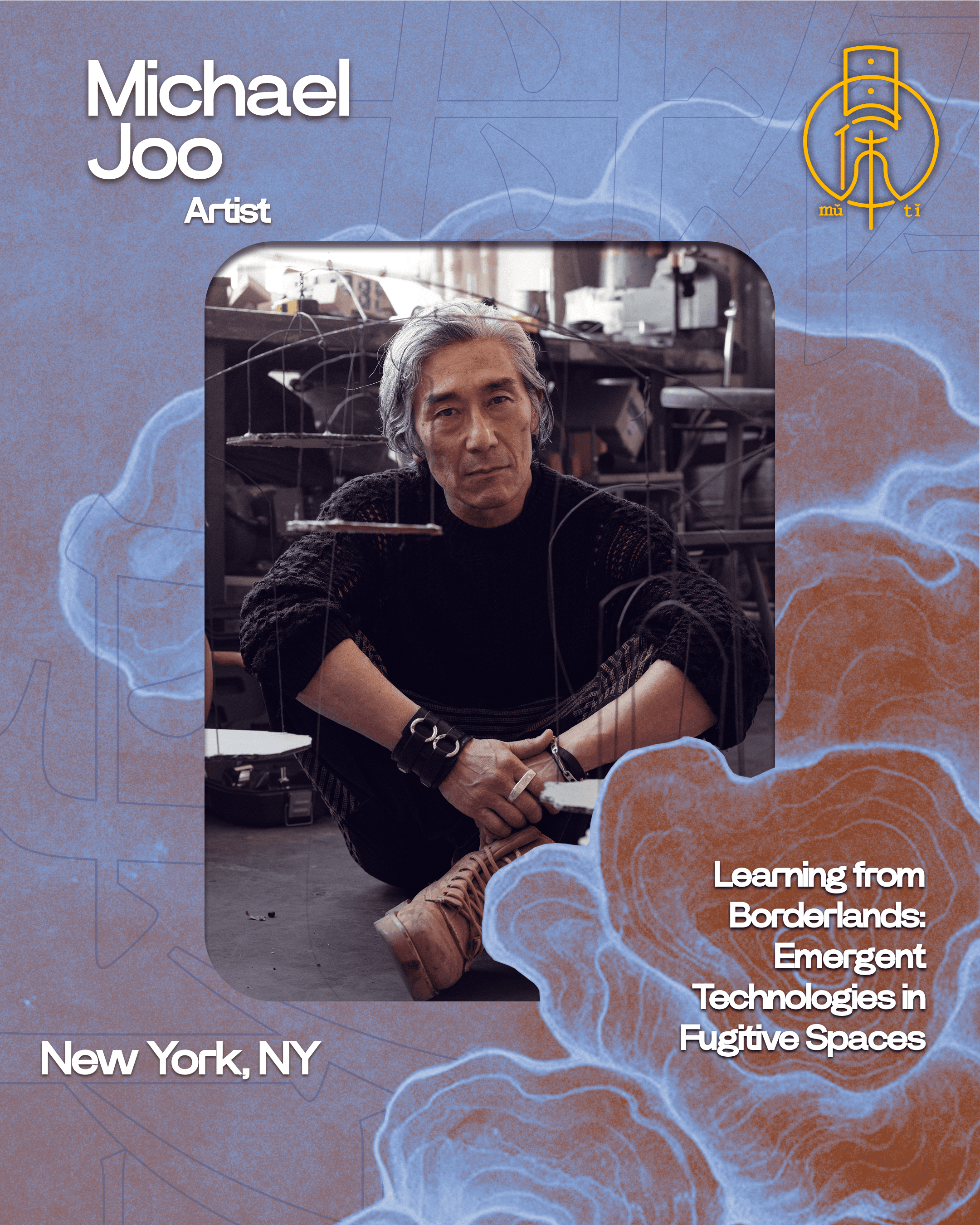
Learning from Borderlands: Emergent Technologies in Fugitive Spaces with Michael Joo
2.Location
3.Date
2 months ago
4.Time
5.Information
What emerges at the edge? Border conditions are often understood as sites of division, yet they can also function as spaces of creative intelligence and technological innovation. In estuaries where freshwater meets the sea, or deserts give way to forests, border conditions often generate forms of life that could not exist elsewhere. Yet borders are not only ecological. On territorialized lands that have been walled, in Indigenous villages that are forced to operate in nationalized languages, and between the modes of connection between human and non-human, new forms of communication, knowledge, and relation emerge. These are places where ways of these new ‘technologies’ are negotiated, can be adapted, and, if resilient enough, are then propagated beyond their place of origin.
For artist Michael Joo, these liminal zones offer a framework for understanding how alternative forms of intelligence take shape. Drawing from research into ecological transition zones, maritime worlds, demilitarized landscapes, and other border ecologies, Joo examines how life at the edge develops unique capacities for adaptation, survival, and exchange. If modern borders often seek to classify, contain, and extract, what can borderless landscapes, such as oceans, teach us about permeability and interdependence? This lecture considers how border conditions generate not only new relational technologies applicable to other contexts, but also how new modes of relation from our ecologies can help us image life beyond fixed sociopolitical dynamics in our world today.
Michael Joo (b. 1966, Ithaca, NY) is an artist whose work explores how people seek meaning, order, and connection in a rapidly changing world. Working across sculpture, painting, photography, and installation, he combines scientific methods, personal histories, cultural artifacts, and evolving technologies to reflect on the ways human lives become entangled with systems larger than themselves. His work frequently examines the traces we leave behind—in landscapes, objects, bodies, and data—and the emotional and political tensions hidden within acts of measurement, preservation, and control. More recently, Joo has incorporated 3D imaging, coding, and blockchain into his practice, using digital and physical forms alike as spaces for collaboration, exchange, and collective imagination.
Recent exhibitions include the one-person Sweat Models 1991–2026 in New York, the presentation of two new installations in the Arsenale of the 61st Venice Biennale In Minor Keys, and the group show Directionless at Hauser & Wirth, Menorca, extending his long engagement with ecology, perception, and collective experience into new technological and material forms.
This moment has ended. Subscribe to West of Here to see exclusive content from this moment, and get notified when their next moment goes live.